Batteries

Electrodeposition development and characterization of sodium-ion battery materials, particularly alloying anodes. Operando techniques to understand how they perform and why they eventually fail.

Research Highlights

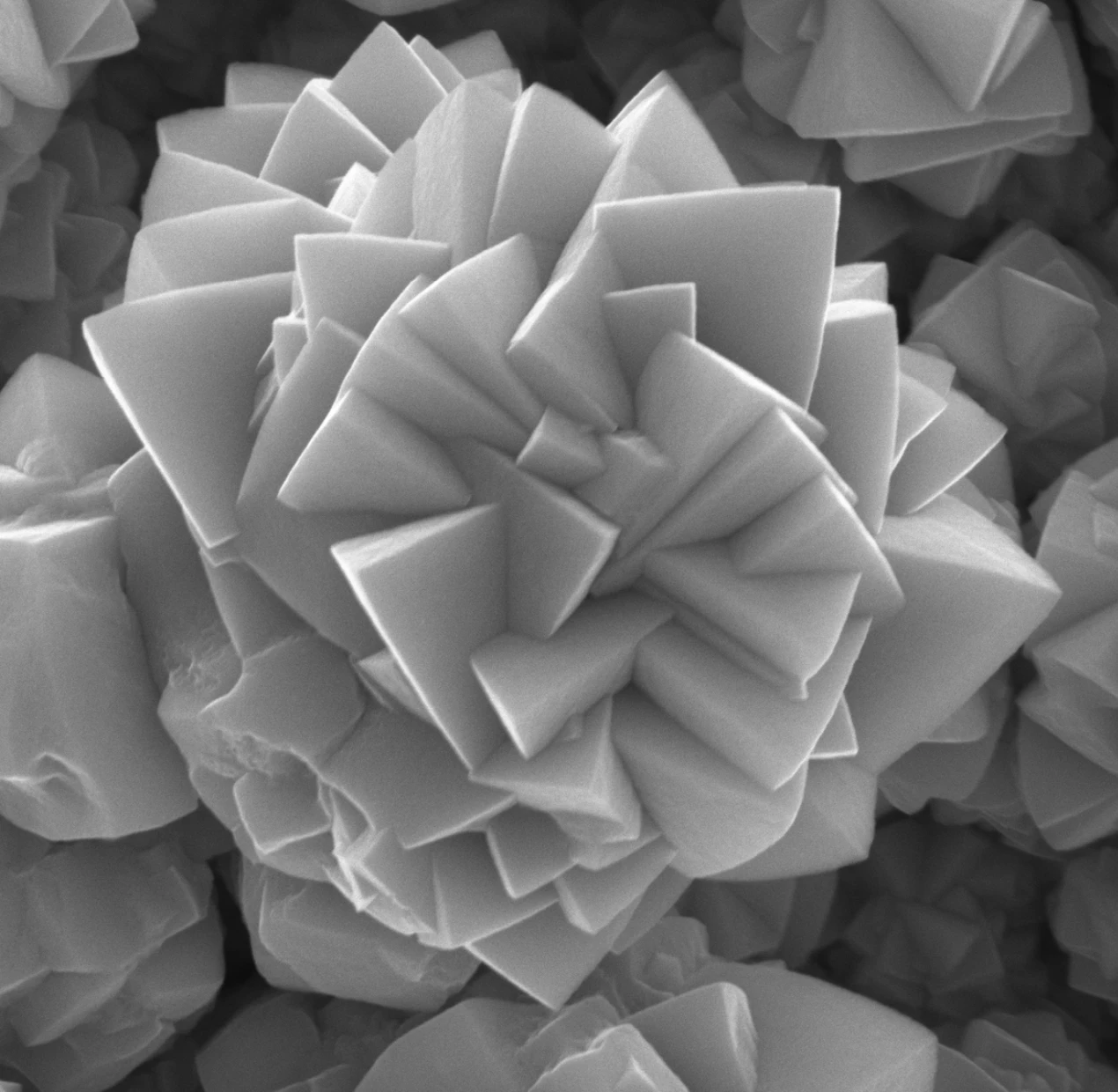
Scanning electron microscopy image of a flower-like electrodeposited SnSb anode material

Electrodeposition of High-Energy-Density Anode Materials for Sodium-Ion and 3D Batteries

Tin and antimony are both promising alloying anode materials for sodium-ion batteries, with high theoretical capacities relative to commercial hard carbon anodes. We synthesize these (and other) materials via electrodeposition, and cycle them electrochemically to understand how and why they fail, and develop strategies to improve their lifespan and observed capacities.
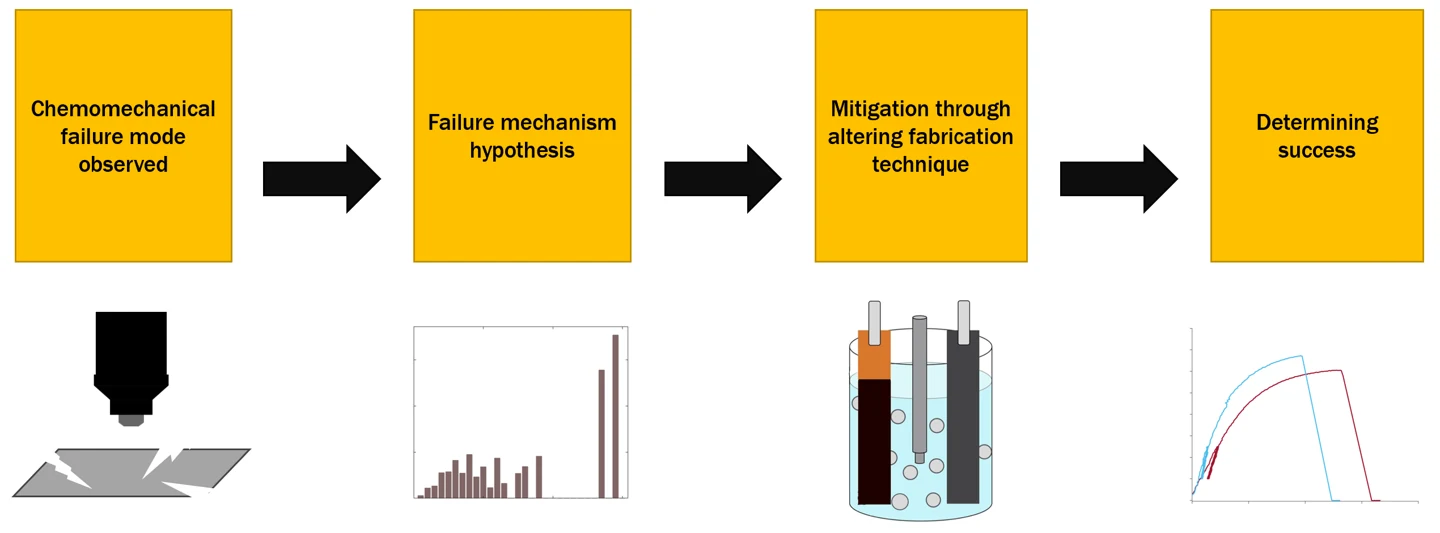
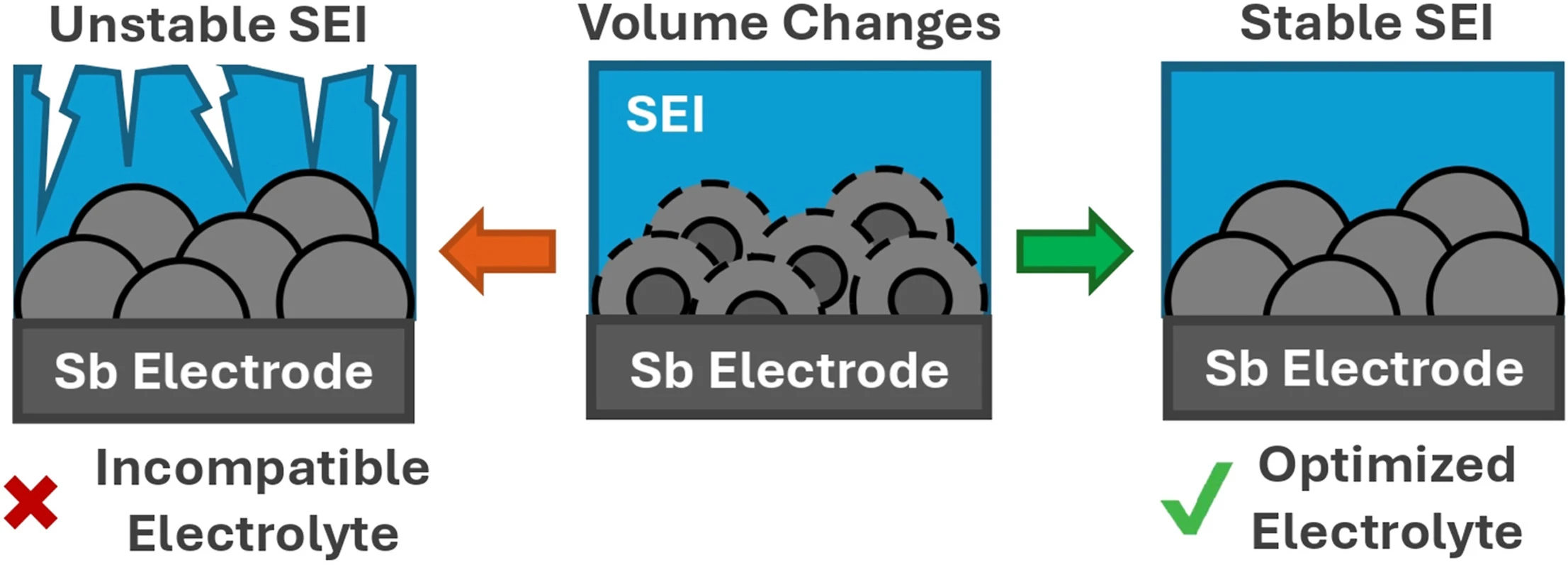
Diagram of the operando optical imaging failure-analysis workflow

Characterization of Battery Materials Using Operando Optical Imaging

For battery materials, more traditional experiments require taking measurements before cell operation and after cell death and then extrapolating what happened in the interim, creating a “black box” effect. We employ techniques to inform failure modes through measurements taken under battery operating conditions, or in operando. These methods aim to simplify the failure analysis of anodes in batteries towards more informed mitigation strategies and materials design.

Diagram comparing an unstable SEI from an incompatible electrolyte to a stable SEI from an optimized electrolyte on an Sb electrode

Development of High-Performance Electrolytes for Sodium-Ion Batteries

Anodes, cathodes, and electrolytes are interdependent, and commercializing sodium-ion batteries requires understanding how they interact. We evaluate how electrolyte composition affects electrochemical performance to identify the best electrolytes for specific anode materials.